A Smarter Way to Deliver Connectivity Without Compliance Risks: The whole UK is becoming used to the concept of fibre and will no longer accept being excluded from high-speed, resilient services. Tenants now expect fibre service as standard in every type of development, from tower blocks to mixed-use residential spaces. On the other hand, the new Building Safety Act 2022, which was introduced in March 2022, represents a revolutionary change in the way any building works have to be performed, particularly those in higher-risk buildings.
Landlords, therefore, find themselves in a difficult position. They need to ensure tenant satisfaction by having up-to-date infrastructure without being caught in a compliance nightmare. Low-impact installation practices are key to ensuring both, and this is why landlords should consider partnering with experts like Arc Partners.
Low Impact, Compliant Strategies: A Guide to Future Proofing
The Building Safety Act 2022 was implemented following a number of significant fire safety failures. The act aims to increase the level of responsibility, the transparency of decision-making, and to promote a better understanding and management of risks in residential buildings.
Why the Building Safety Act 2022 is so important: It imposes stricter controls over higher-risk buildings (18 m and over or with 7 or more storeys); defines who is accountable; introduces a digital record of building works (golden thread); and increases the scrutiny of any works that could impact on structural safety and fire safety. For landlords, this means that every type of installation may potentially impact on the building’s structural or fire safety requirements, and this could range from the installation of the simplest telecom equipment.
Why Fibre installations can become a compliance problem
On their own, fiber optic cables appear to pose no risk. However, the manner of installation dictates whether it will automatically fall under a compliance requirement. The installation processes likely to fall under this category include:
- Drilling through fire-rated walls or floors
- Installation of new internal risers and cabinets
- Compromising fire compartments
- Inadequate fire-stopping at cable entry points
Such practices may turn a routine installation into an activity regulated under the Act.
A More Intelligent Option: Fibre installation without compliance complications
Landlords with a forward-looking approach don’t wait until they are confronted by the relevant legislation to respond. Instead, they take an active strategy that reduces risk right from the start of any fiber installation project. These approaches include:
- Non-invasive installations
Minimise disruption:
- Install fibre by surface mounting cabling
- No requirement to alter buildings or services
- Maintaining fire compartmentation of the building
- Maximise use of existing services:
- Existing ducted and rising shafts
- Previously laid cable tray/containment systems
- Existing communal service runs
- External runs where applicable:
- Installing fiber along building exteriors
- Strategic cable entry points
- Minimal internal disruption
- Fire safe materials & design:
- Fire-resistant cables & enclosures
- Sealed cable entries & service runs
- Ensuring building fire safety compliance is achieved
- Future-proof design:
- Modular installation for future upgrades
- Easily expanded/ upgraded without major intrusion
- Designed for growth.
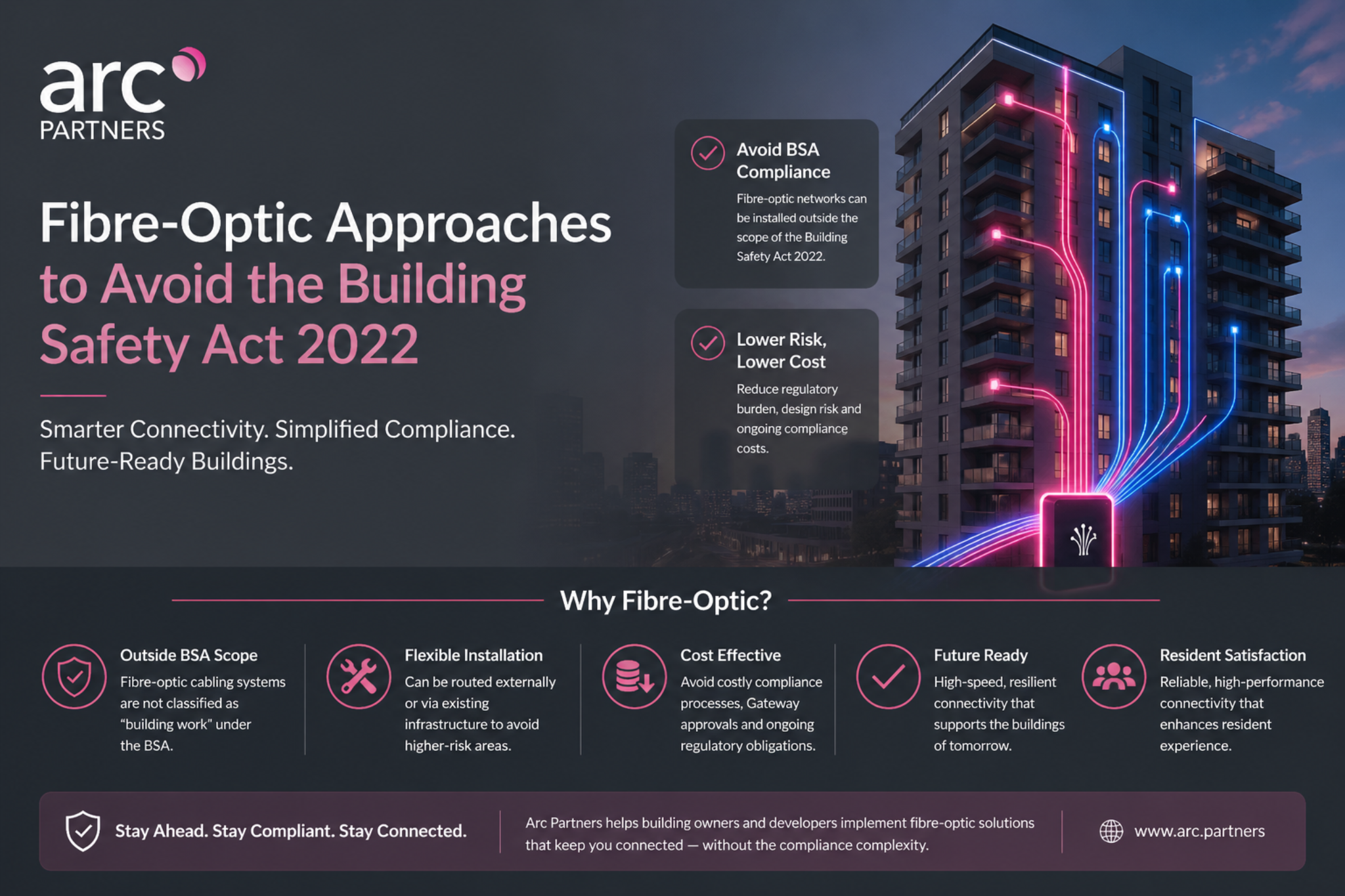
Advantages of the above:
Using BSA-conscious fibre strategies enables Landlords to:
- Avoid cumbersome compliance steps
- Minimise the time the installation takes
- Control installation costs
- Considerably limit tenant disruption
- Maintain full property control.
What Landlords get wrong (even experienced landlords)
What even experienced landlords get wrong:
- Approve an installation without reviewing it
- Letting the operator decide the installation strategy
- Overlooking the Fire Safety implications
- Failure to record/ report changes made (losing the golden thread)
- Assuming fibre upgrades are inherently “low-risk”
- Error in any of these areas results in costly rework.
How Arc Partners Ensures You are Prepared
Arc Partners collaborates with landlords, developers and asset managers to facilitate efficient and compliant fibre installations.
Key Services they offer landlords:
- Strategic telecom planning
- Compliance risk assessments
- Operator negotiation assistance
- Long-term infrastructure planning
- Landlord rights and asset value protection
Our promise is straightforward: to get your connectivity sorted right the first time.
When should you get in touch with them?
Timing is critical, much more than landlords often assume:
- Before any fibre installation begins
- To facilitate a copper-to-fibre upgrade
- During refurbishment or redevelopment
- If you are approached by telecom operators
- When planning for regulatory audits
- An early start prevents expensive last-minute problems.
The Road Ahead – Fibre and Compliance
As the UK advances toward an all-digital infrastructure, this is where things are heading:
Heightened regulation on changes to buildings
- Increased adoption of smart technology solutions
- Demand for “low impact” and sustainable infrastructure deployment
- Improved connection between telecom infrastructure and building safety standards
- Landlords who invest and plan ahead can anticipate an increase in property values, better retention of tenants, and a reduced number of compliance issues.
Frequently Asked Questions for Fibre-Optic Approaches to Avoid the Building Safety Act 2022:
Does laying fibre trigger the Building Safety Act 2022?
It all depends on how the installation takes place. If non-intrusive and doesn’t alter the building or affect fire integrity, then it won’t trigger the act.
What is the main concern with installing fibre in an apartment block?
Penetrations in fire compartments, which can compromise building fire safety, resulting in regulatory involvement and major costs if something is not carried out to the regulations.
Can landlords regulate the installation of fibre by telcos?
Absolutely – the landlord is in a position to control and set conditions, but they have to proactively manage their position. If the landlord simply doesn’t know the processes the telcos operate with, it may well happen the telcos will have their way to do it quickly as opposed to in a compliant way.
What is the most compliant method to lay fibre?
By utilising the existing infrastructure or using external surfaces, this avoids penetrating the structure. If that is not an option, then surface-mounted systems should be used, and appropriate fire-rated materials must be utilised.
How can fibre impact the value of the property?
By improving connectivity, you can attract a greater number of tenants, as this improves the living experience of any tenant and potentially the value. This can go the other way if it triggers compliance issues for a landlord when they try to sell or refinance the property.
How is the golden thread relevant to fibre installations?
A golden thread necessitates precise records of all changes to the building, and fibre installations must be meticulously recorded and transparent throughout the building’s lifetime.
Will upgrading fibre in the future lead to activation of the Act?
Yes, if the initial installation plan already takes future growth and changes into account, then if a fibre system is designed modularly, it can be expanded without any structural alterations and therefore will not need to be made to comply with an already active act.
Why should landlords plan early for fibre installation?
Early planning enables landlords to conduct risk assessments, identify compliant installation techniques and negotiate terms with operators. This will minimise time delays and project expenses.
What consequences can occur if the installation of fibre violates fire safety rules?
Enforcement measures, delays, penalties and mandatory corrective work may be implemented for any installation that does not comply with fire safety rules and in worst-case scenarios, this may affect occupancy of the building.
What are the advantages for landlords in working with Arc Partners?
Arc Partners offers expertise in telecom strategy, compliance and negotiation and will help landlords to avoid making mistakes which could be expensive, maintain the control and power they possess within the building and ensure that installations comply with operational and legal standards.
The Takeaway- Safe Fibre Installation
Fibre is critical for a modern building and requires proper and safe installation. A well-installed fibre system has never been more important and could not have greater repercussions following the Building Safety Act 2022.
By using a non-invasive installation procedure and working with consultants such as Arc Partners, landlords can ensure that the high-speed connectivity required by their tenants is provided while eliminating potential risks and dangers.
It is not a question of whether fibre should be installed; it is a question of correctly installed fibre. Want to know more? Feel free to contact Arc Partners by dialing 020 3689 0282 or dropping your queries at enquiries@arcpartners.co.uk.