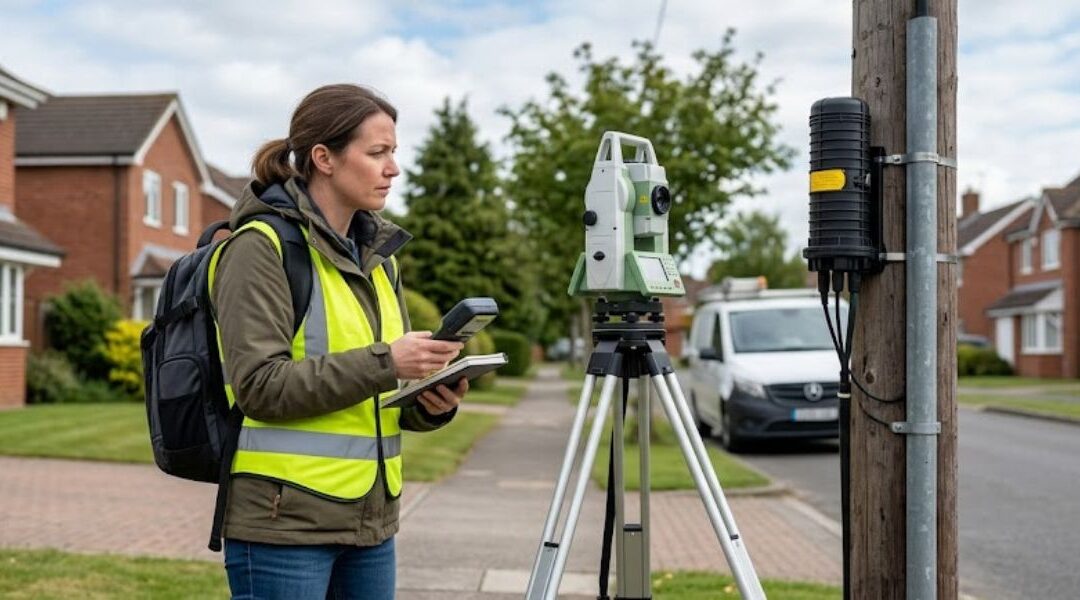
Whether you are rolling out a new broadband network, upgrading a mobile mast, or laying fibre-optic cables beneath a town centre, there is one professional whose input shapes the success of the entire project from the outset: the telecom surveyor. Yet despite the critical nature of the role, many project managers, local authorities, and business owners are unsure exactly what a telecom surveyor does, or when they genuinely need one.
This guide explains the role in full, sets out the qualifications typically required, details the core responsibilities involved, and helps you identify the situations in which instructing a telecom surveyor is not just advisable but essential.
What Is a Telecom Surveyor?
A telecom surveyor is a specialist professional who assesses, plans, and reports on the physical, technical, and regulatory aspects of telecommunications infrastructure. Their work bridges the gap between an engineer’s technical design and the real-world environment in which that design must be built and maintained.
Unlike a general building surveyor, a telecom surveyor focuses exclusively on communications infrastructure — including mobile telecommunications masts, antennas, fibre-optic ducting, copper cabling networks, broadband cabinets, satellite dishes, and associated apparatus. They work closely with network operators, local planning authorities, property owners, and civil engineering teams.
In the United Kingdom, the work of a telecom surveyor is governed by several legal and regulatory frameworks, including the Electronic Communications Code (as amended by the Digital Economy Act 2017), the Town and Country Planning Act 1990, and the various permitted development rights set out under the Town and Country Planning (General Permitted Development) (England) Order 2015. A competent telecom surveyor must understand how these frameworks interact with practical site conditions.
Core Roles and Responsibilities
The day-to-day responsibilities of a telecom surveyor vary depending on the type of project and the stage of development, but the following areas represent the core of the role.
1. Site Assessment and Feasibility
Before any infrastructure is designed or installed, a telecom surveyor will conduct a detailed site assessment. This involves visiting the proposed location to evaluate ground conditions, structural suitability (for mast or rooftop installations), access routes, proximity to sensitive land uses, and any existing infrastructure that might affect the design.
The surveyor will identify constraints, both physical and regulatory, and produce a feasibility report that informs the project team’s decision-making before significant costs are committed.
2. Planning and Permitted Development Advice
One of the most valuable contributions a telecom surveyor makes is navigating the planning system. Many telecommunications installations benefit from permitted development rights, meaning they do not require full planning permission. However, these rights come with conditions, limitations, and prior approval requirements that vary by location, installation type, and proximity to conservation areas or listed buildings.
A telecom surveyor advises on which consenting route is appropriate, prepares or reviews prior approval and planning applications, and liaises with local planning authorities on behalf of their client.
3. Lease Negotiations and Code Agreements
Where infrastructure is to be installed on third-party land — a rooftop, a field, or a roadside verge — the Electronic Communications Code governs the rights of operators and landowners. Telecom surveyors act on behalf of both operators and landowners in negotiating site access agreements, Code Agreements, and leases. They provide independent valuations of the site’s worth to the operator and advise their clients on fair and enforceable terms.
4. Structural and Radio Frequency Surveys
For mast and antenna installations, a telecom surveyor will either carry out or commission structural surveys to confirm that a building or structure can safely bear the load of the proposed equipment. They may also coordinate radio frequency (RF) assessments to demonstrate that electromagnetic emissions from the installation comply with ICNIRP guidelines and UK public health standards.
5. Project Management and Contractor Oversight
During the construction and installation phase, telecom surveyors often take on a project management function. They supervise contractors, monitor programme against milestones, manage health and safety compliance, and ensure that the works delivered on site match what was designed and consented.
6. Decommissioning and Asset Management
At the end of a site’s operational life, or when an operator wishes to remove infrastructure, a telecom surveyor manages the decommissioning process. This includes coordinating removal, overseeing site reinstatement, and discharging any obligations owed to landowners under the terms of a site agreement.
Telecom Surveyor vs Related Roles: Key Differences
It is common to confuse telecom surveyors with adjacent roles. The table below clarifies the distinctions.
| Role | Primary Focus | Regulated By | Typical Employer / Client |
| Telecom Surveyor | Telecoms infrastructure — masts, fibre, antennas, cabinets | RICS (optional), OFCOM frameworks, Electronic Communications Code | Network operators, landowners, local authorities |
| Building Surveyor | Condition, repair, and value of buildings and property | RICS (typically chartered) | Property owners, developers, banks |
| Civil Engineer | Design and structural integrity of infrastructure and earthworks | ICE / IStructE | Contractors, utilities, highways authorities |
| Town Planner | Land use, zoning policy, and planning applications | RTPI | Local authorities, developers, consultancies |
| Network (RF) Engineer | Radio frequency design, signal propagation, coverage modelling | IET / BEng level qualifications | Mobile network operators, OEMs |
Qualifications and Professional Development
There is no single mandatory qualification to work as a telecom surveyor in the UK, but the most credible and sought-after practitioners hold a combination of the following credentials.
- BSc or BEng in Surveying, Property, Civil Engineering, or Telecommunications Engineering — the most common academic entry routes.
- Royal Institution of Chartered Surveyors (RICS) Membership (AssocRICS or MRICS) — while not specific to telecoms, RICS membership demonstrates rigorous professional standards in valuation, negotiation, and project management.
- BTEC or HND in Electrical, Electronic, or Telecommunications Engineering — a common vocational pathway for those entering the sector.
- Electronic Communications Code Training — an in-depth understanding of the Code is considered essential and many practitioners undertake specialist CPD courses through bodies such as the Property Litigation Association or sector-specific training providers.
- Health and Safety Certifications — including CSCS card, PASMA, and Working at Height qualifications, which are typically required for site access.
- First Aid at Work Certificate — widely required for fieldwork roles.
In practice, many experienced telecom surveyors have built their expertise through years of on-the-job training with a network operator, a specialist telecoms property consultancy, or a local planning authority. Demonstrable track record and sector knowledge often carry as much weight as formal qualifications when hiring.
When Do You Need a Telecom Surveyor?
The following scenarios represent the most common situations in which instructing a telecom surveyor is strongly advisable.
You Are a Landowner Approached by a Network Operator
If a mobile network operator, broadband provider, or infrastructure company approaches you about installing equipment on your land or building, you should seek independent telecom surveying advice before signing anything. A surveyor acting on your behalf will ensure any Code Agreement or lease is fair, commercially sound, and does not inadvertently restrict how you use or sell your property in future.
You Are Developing a New Site That Requires Connectivity
For large residential developments, business parks, or mixed-use schemes, a telecom surveyor can advise on the connectivity infrastructure required, coordinate with network operators at the early design stage, and help ensure the development meets the requirements of the Building (Amendment) Regulations 2016 regarding in-building physical infrastructure.
You Are an Operator Rolling Out New Infrastructure
Network operators and their contractors routinely engage telecom surveyors to manage the site acquisition process — identifying suitable locations, conducting site surveys, progressing planning and prior approval applications, and negotiating access agreements.
A Planning Application Involves Telecoms Apparatus
Whether you are objecting to a proposed mast installation near your property or trying to secure consent for new infrastructure, a telecom surveyor can provide expert input to the planning process. Their reports carry significant weight before planning committees and at appeal.
You Are Involved in a Dispute Under the Electronic Communications Code
Disputes between operators and landowners are increasingly common, particularly around rent levels, renewal terms, and removal of apparatus. Telecom surveyors provide expert witness evidence and support negotiation and, where necessary, Tribunal proceedings under the Code.
Final Thoughts
The telecommunications sector in the UK is expanding rapidly. The rollout of 5G, the government’s Project Gigabit programme, and the ongoing upgrade of the national mobile network mean that the demand for skilled telecom surveyors has never been greater and the consequences of proceeding without one have never been higher.
Whether you are a landowner seeking to protect your property rights, a developer building out connectivity infrastructure, or an operator expanding your network, a qualified and experienced telecom surveyor like Arc Partners is one of the most valuable appointments you can make at the outset of any project.
Frequently Asked Questions
Do I need a telecom surveyor for a small mast installation?
In many cases, yes. Even relatively modest installations, such as a small rooftop antenna or a street-level broadband cabinet, may trigger prior approval requirements, require a formal site agreement with a landowner, or involve structural assessment of the host building. A telecom surveyor can quickly advise on whether these steps are necessary and manage them on your behalf, avoiding costly delays or legal exposure.
How much does a telecom surveyor cost in the UK?
Fees vary considerably depending on the scope of work, the complexity of the project, and the seniority of the surveyor engaged. Simple site assessments or planning advice may cost from £500 to £2,000. Ongoing project management roles, Code Agreement negotiations, or expert witness work can run to several thousand pounds. Many surveyors offer an initial consultation at a fixed or hourly rate, which helps clients scope the likely total cost before committing.
Can a general chartered surveyor carry out telecom surveying work?
A general RICS-qualified surveyor will have a strong foundation in valuation, negotiation, and property law, but telecom surveying requires sector-specific expertise, particularly around the Electronic Communications Code, radio frequency considerations, and planning permitted development rights for telecoms. It is advisable to instruct a surveyor who specialises in telecommunications or who works within a firm that has a dedicated telecoms team.
What is the Electronic Communications Code and why does it matter?
The Electronic Communications Code (contained within Schedule 3A of the Communications Act 2003, as amended) sets out the legal framework governing how telecommunications operators can install and maintain infrastructure on public and private land. It defines the rights and obligations of both operators and landowners, including how agreements are valued and what happens when disputes arise. A thorough understanding of the Code is one of the most important competencies a telecom surveyor must possess.
How do I find a qualified telecom surveyor in the UK?
You can search for specialists through the RICS Directory, the Telecommunications Industry Association, or through specialist telecoms property consultancies. It is worth asking any prospective surveyor to demonstrate experience of work similar to yours, such as mast negotiations, fibre rollout projects, or planning applications, and to provide references from previous clients.