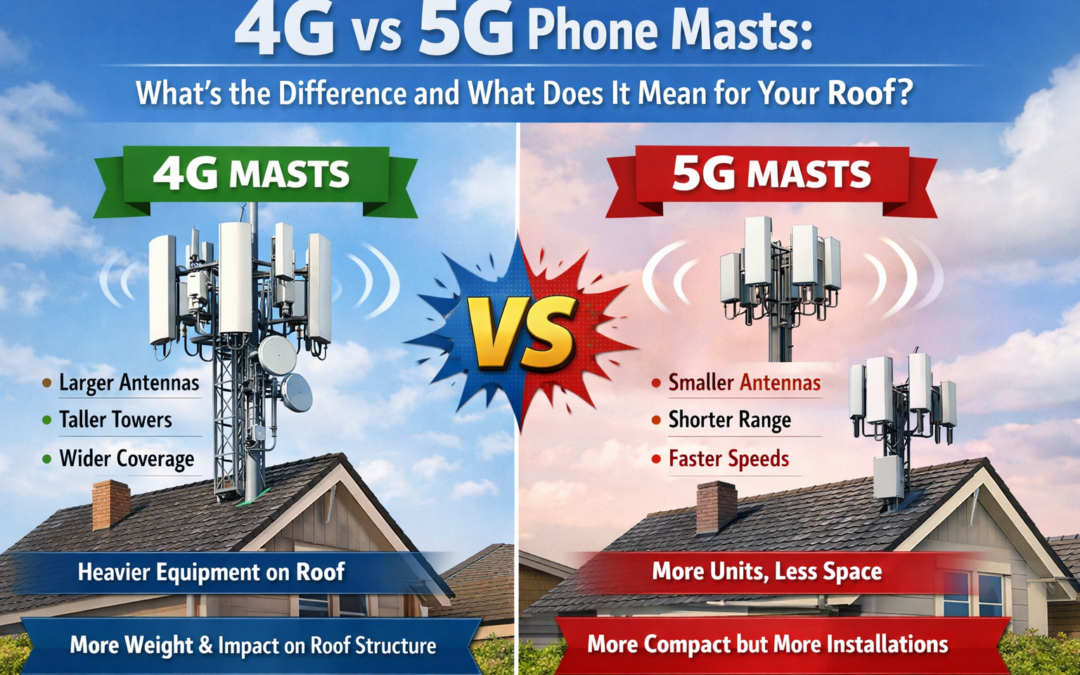
As 5G is rapidly rolled out across the UK, chains of telecoms operators are contacting more landowners and property owners to put up infrastructure on buildings. Mobile phone masts are not a new phenomenon, but the move from 4G to 5G is altering the locations and types of these installations. If you have been approached about putting a mast on your roof — or already have one — it is important to understand the 4G and 5G infrastructure, including what that means for your property, what your rights are, and how it may affect your income.
What are 4G and 5G Phone Masts?
Mobile phone masts are telecommunication towers that send and receive wireless signals to provide mobile telephone service.
The equipment of a 4G mast has proven to be able to cover larger areas with a network connection. Most buildings, blocks, or streets are covered by this technology.
Unlike 4G, however, which should mean slapping even more masts on buildings for greater speed and higher data capacity, but over shorter distances.
That core difference drives the surge in installations, especially on rooftops and urban buildings.
It is essential for property owners to comprehend how these technologies vary. The gist: 5G needs orders of magnitude more sites — hence why rooftops are getting increasingly grabbed.
Why 5G Requires More Masts on Buildings
In contrast to 4G, which can use a single mast to cover big areas, 5G is based on dense networks of smaller cells. Said another way, operators require additional locations to provide ubiquitous coverage.
So, for property owners, this means:
- Increased requests for rooftop access
- More frequent equipment upgrades
- Long-lasting presence of telecoms infrastructure
Building a part of the UK’s digital infrastructure, especially as demand for rooftop installations accelerates in urban areas.
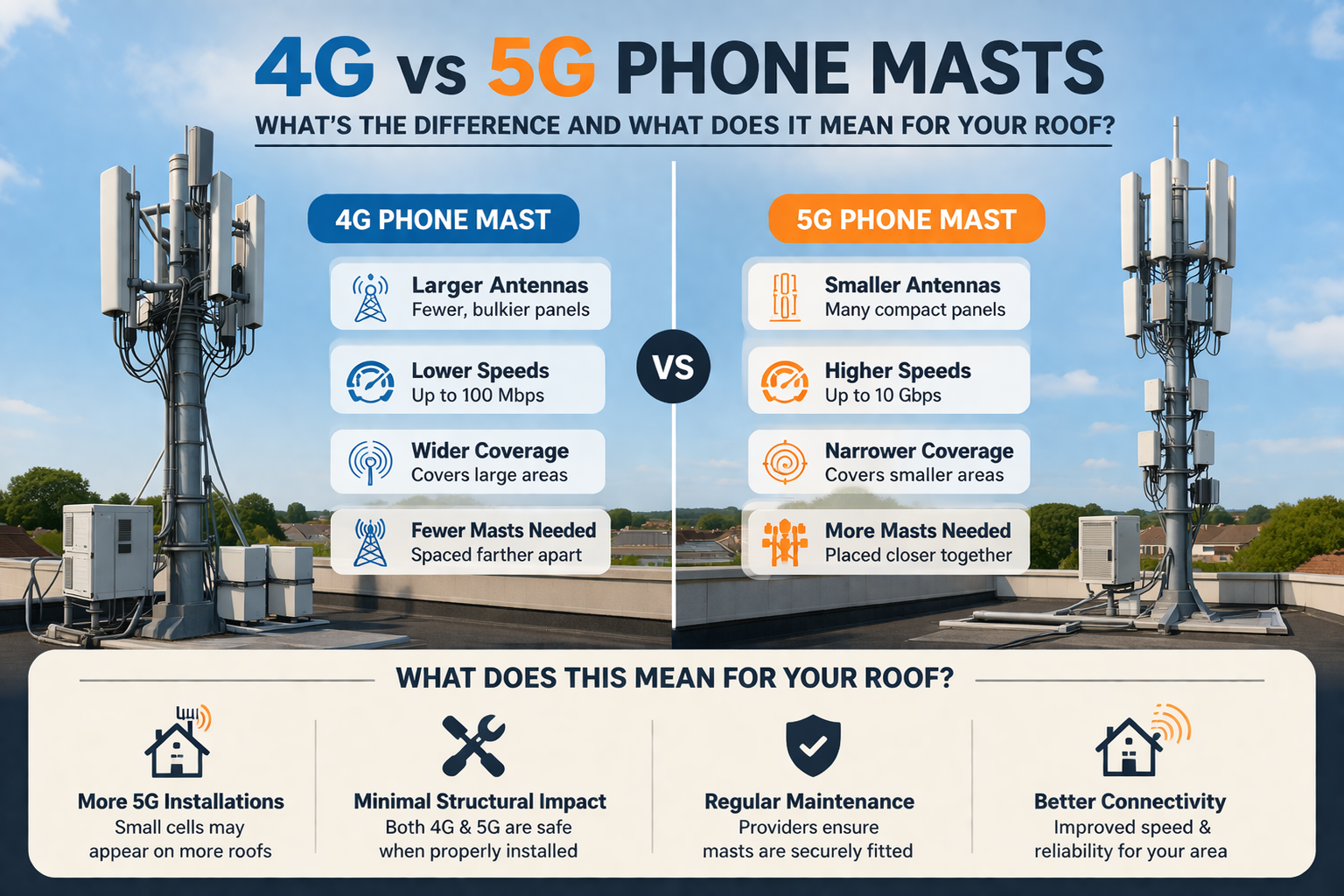
What Is a Phone Mast for Your Roof?
There are pros and cons of letting a telecoms operator install equipment on your roof.
Structural Considerations
In some cases, it needs structural assessments to be able to install this equipment safely. Operators come in to install the units, but you should understand if this might impact your building in any way.
Access Requirements
Operators will require continuous access for maintenance and upgrades. These can be routine visits and emergency access provisions.
Visual Impact
Even though advanced 5G equipment is smaller, the devices can still impact how your property looks.
Long-Term Agreements
Mast contracts are typically for multiple years, and often decades long, with little room to change.
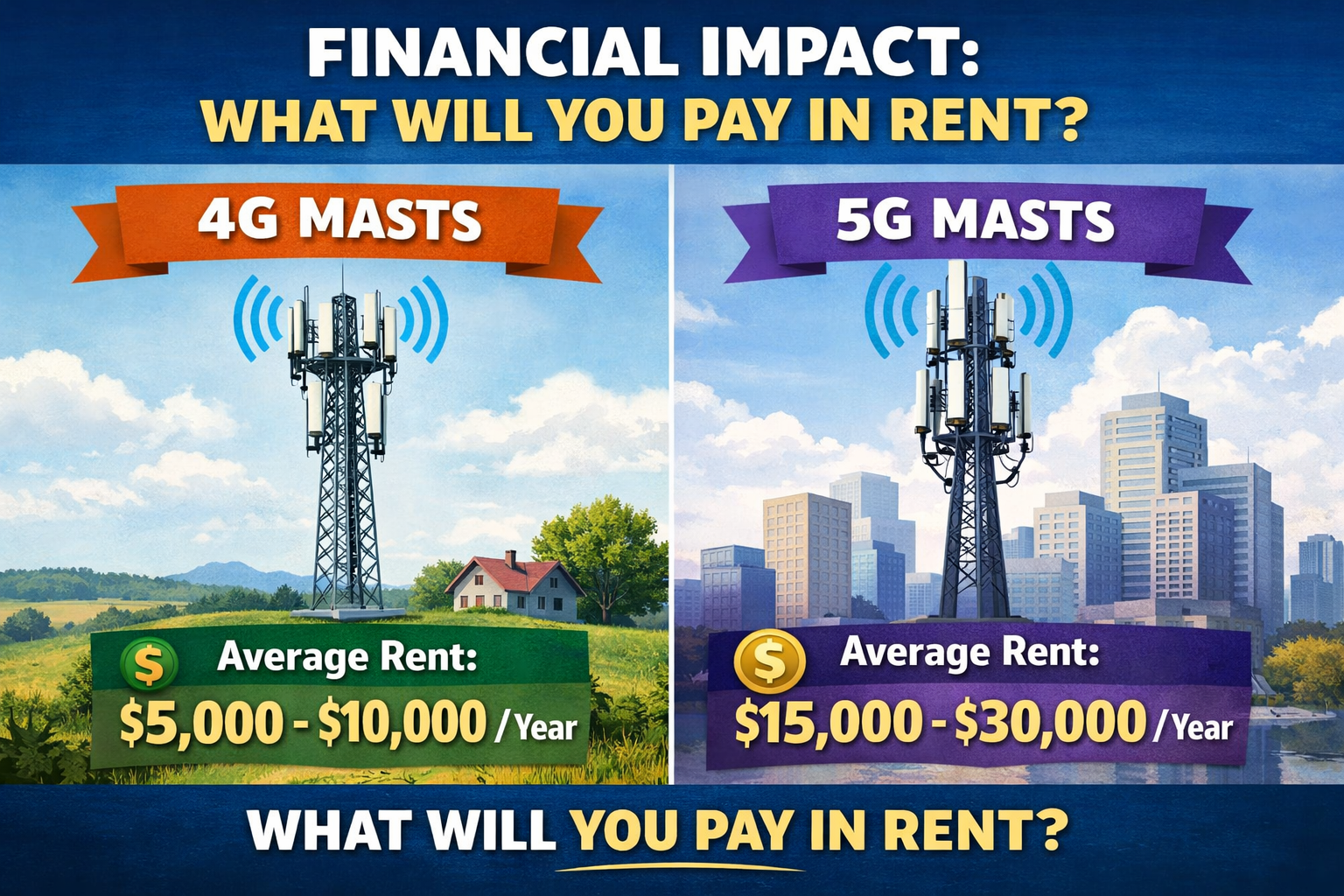
Financial Impact: What Will You Pay in Rent?
Mast agreements are typically appealing to property owners due to the prospect of generating rental income. But much has changed in the financial landscape.
4G vs 5G Rental Differences
In the past, the 4G mast agreements also took higher rental payments. In the proposed legal framework, 5G agreements are often a result of new valuation methods, which create lower rents.
What Affects Your Rent?
- Location and demand
- Building height and accessibility
- Availability of alternative sites
- Negotiation strength
This is where professional counsel plays a vital role. Arc Partners, which specialises in advising land owners on telecoms agreements, will ensure you get a fair market deal rather than settling for below-market offers.
What You Need to Know Legally
The Electronic Communications Code (ECC) regulates telecoms agreements in the UK and provides extensive powers to operators.
Key points include:
- Any disputes can be resolved by a tribunal
- They often prioritise public benefit (network expansion)
But that doesn’t mean you have no power. Land owners still have the right to:
- Negotiate terms
- Seek compensation
- Challenge unfair agreements
Before anything else, you must know the legal aspect of entering any agreement.
4G and 5G Masts: Common Problems
That is a problem many landowners have with telecoms operators.
Low Rental Offers
Bids are often far lower than expected, especially under new 5G contracts.
Pressure to Agree
Operators can create a sense of urgency and pressure you to agree quickly.
Access Disputes
Access requests that happen too frequently can easily be disruptive if not handled properly.
Upgrade Clauses
Deals may permit operators to upgrade equipment with no further payment.
These difficulties underline the importance of consulting experts before signing any deal
Should You Let a 5G Mast Be Installed on Your Property?
This is a decision based on your priorities and circumstances.
Benefits:
- Passive income stream
- Contribution to improved connectivity
- Increased property value (in some cases)
Risks:
- Long-term restrictions on property use
- Legal complexity
- Reduced control over your property
It is advisable to weigh these factors carefully before making a decision and consulting with professionals.
How to Negotiate a Better Mast Agreement
That brings us to negotiation, one of the key stages in the process.
Key Tips:
- Do not accept the first offer
- Understand all contract terms
- Negotiate rent and access conditions
- Get professional legal and surveying counsel
Arc Partners represents landowners in telecoms negotiations, leveraging years of experience to ensure landowners get the best possible terms and protect their rights as well as avoid costly mistakes.
When to Seek Legal Advice
The following are some reasons to seek professional support if:
- You are offered a supply service from a telecoms provider
- You’re unsure about contract terms
- You’re facing pressure to agree
- A dispute arises
Gaining early guidance will put you in a much better place and avoid many potential long-term issues. Specialists other than Arc Partners do precisely that, so you have total information as correctly represented.
Conclusion: The Real Meaning of 4G vs 5G for You
Not just technology, but a change that influences home and property owners across the UK.
More masts, more installations, and increased legal complexity require landowners to act. Yes, there are major financial opportunities, but also risks that need to be carefully managed.
Knowing your rights, negotiating favourably, and obtaining expert advice will help you make informed decisions that safeguard your property and get the best returns.
FAQs for 4G vs 5G Phone Masts:
What is the difference between 4G and 5G masts?
The primary difference is in coverage and speed. 4G masts are for broader coverage with reasonable speeds, while 5G masts provide extremely quick speeds in more localized areas and are geographically limited, leading to significantly increased deployment rates.
Will 5G add masts on buildings or increase their size?
True, 5G needs a lot more small installations, and so we will see masts pop up on rooftops and in cities. Which is why more and more telecoms operators are knocking on the doors of property owners.
Is it possible to refuse a telecoms operator installing a mast?
You can challenge an initial request, but operators can seek a tribunal under the Electronic Communications Code. You can refuse, but you cannot prevent the installation permanently.
How much rent will I receive from a mobile phone mast?
Rental income depends on location, demand, and negotiation. Newer agreements may see lower rents, but even in this instance, you’d have the benefit of professional advice on securing better terms and optimising financial return.
Is a master agreement legal advice needed?
Yes, definitely going to need legal advice. Mast agreements are commonly complicated and can be provided for long periods of time; therefore, doing work with authorities like Arc Partners will allow you to realize your proper rights, negotiate effectively, and steer clear of bad terms.