
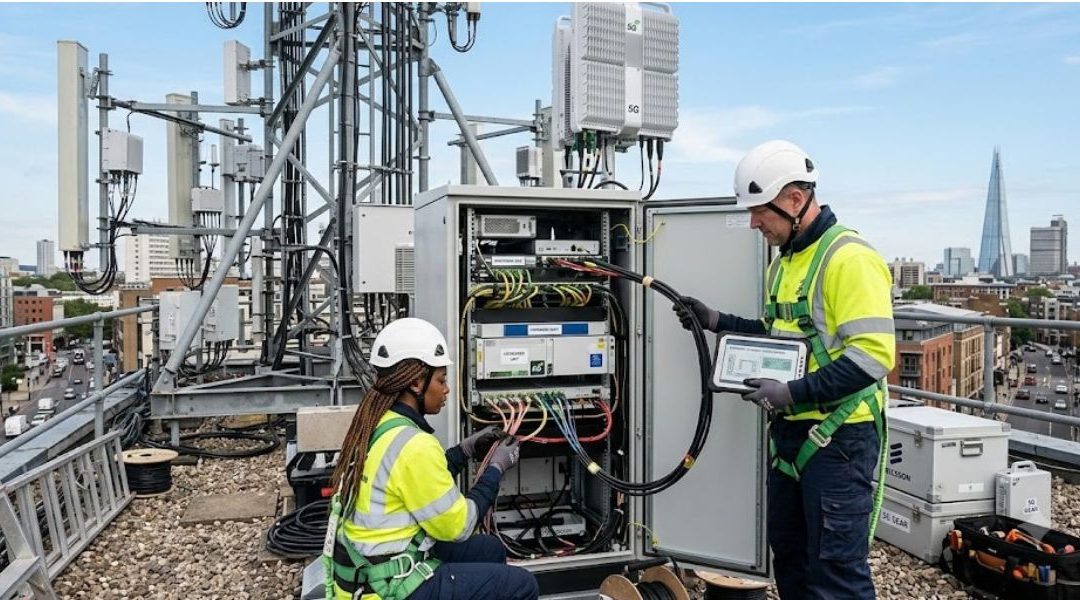
Landlords hosting mobile network operators – on rooftops, greenfield masts, utility substations and water towers – are now familiar with receiving a form letter setting out the operator’s intention to upgrade existing apparatus as standard procedure, but there is much more happening behind the scenes than is appreciated, and interaction between the two can have a real impact on the future potential value of the asset and the flexibility of a site.
Getting to grips with where the actual process begins, where its legal starting point exists, and where and how the negotiating leverage points lie is key to preserving the asset, whilst managing the landlord/ operator relationship in a professional manner.
Why Telecom Equipment Need an Upgrade Regularly?
As the UK 4G network is revamped and 5G deployed, and as the public network is wound down for 3G, the proliferation of shared apparatus, the migration to fibre backhaul and the mission to meet government coverage requirements under the Shared Rural Network programme all contribute to a seemingly regular stream of equipment change, from replacing old antennas for a bigger array of Massive MIMO units, adding new radio units to an existing cabinet, installing a new cabinet to replace microwave backhaul, or even upgrading a headframe to carry extra load – these changes can have major implications for wind loading, planning status, power demands and the tenant’s own space utilisation.
The Statutory Starting Point: The Electronic Communications Code
When the 2017 reform of the Electronic Communications Code was introduced, it transformed the power dynamic in many telecoms agreements, and the ability of operators to upgrade and share apparatus now exceeds the common ground many landlords are used to.
Paragraph 17 of the Code grants an operator with a code agreement under it the legal right to upgrade and share already-installed equipment, without needing the landlord’s consent, provided that two constraints are satisfied: there is no material negative impact – or a “minimal adverse impact” – on the visual aspect of the apparatus; and there is no new burden on the landlord other than what was already anticipated.
In practice, this means that landlords cannot simply block an upgrade they dislike, and if the agreement on the property is a Code-protected lease completed post-December 2017, the operator’s expansion rights are generally implied, even if the contract is an older lease document that predates the new Code.
Where the Real Negotiation Lies?
The extent of the upgrade permitted remains subject to a series of practical and technical considerations that specialists, surveyors, can assist with, including:
- Capacity structure-wise: It is the current roof, headframe, or mast capable of supporting heavier antennas or instrument cabins, or is some strengthening needed – and at what expense?
- Visual and planning considerations: The use of larger 5G masts or antennas, extra distant-sight dish or an instrument cabin on the ground space could quite easily violate the principle of “minimal visual impact,” particularly in case of any listing or conservation area.
- Power supply and utility issues: There are several cases when an upgrade will involve additional mains electricity supply or other power arrangements, new power distribution panels, cabling runs, penetrations, and whether the upgrade preceded the actual metering availability.
- Time access and program: In this case, an upgrade will definitely involve access and likely some equipment lifting scaffolding and possibly lane closure during the time of installation.
- Impact on other users of the roof and the landlord’s own HVAC and electrical components: Does the new equipment influence the views, access, and thus the carrying capacity of the existing equipment on the shared roof or headframe?
Tips for a Landlord to do Before the key technical Assessment can be Written
A practical overview – what should a landlord expect? Once an upgrade notice lands, it will usually go through a familiar sequence of events:
- A notice and technical drawing pack: the operator or its agent, often acting on behalf of a shared network, provides a notice with a table of equipment and suggested elevations, sometimes with a structural method statement.
- Verification of the rights: the landlord’s surveyor considers the underlying agreement document – is it a Code-protected lease, a historic wayleave, or a pre-2017 licence – as it makes a difference to which rights it carries.
- Structural and planning assessment: we confirm whether the proposal is truly within “minimal impact” visual impact standards, including assessing whether a location or simple wind-up test on larger antennas sitting on the roof will be sufficient.
- Conditions and safeguards: while the Code in this regard effectively compels consent, good practice would require the landlord to use the notice period to secure reimbursement of structural reinforcement costs, its own insurances, reinstatement rights and restrictions, working hours and other safeguards.
- Commercial point: an upgrade of this kind can be the occasion to agree a variation of rent or service charge share for increased power, or indeed the creation of a deed of variation to an agreement that at present does not seem to allow this sort of upgrade.
- Record the increased load: as-built structural and load plans should be kept on record against the property – future lease lettings, insurance valuations and Code renewal/termination negotiations all require accurate drawings.
Common Issues and How They Get Resolved
The common recurring issues that crop up can usually be mitigated by following some best practice steps:
| Flashpoint | How It’s Resolved |
| “The operator says consent is not required; is that correct?” | Not necessarily. When the works cross the boundaries of having no visual impact and involve a real burden — for example, an additional cabin interfering with access to a fire exit, or a load above that which the roof was designed to bear — then the landlord has the right to withhold consent and insist on some alteration or a renegotiation. Make a quick assessment of the visual and structural impacts, since lack of objection is taken as consent. |
| “Whose responsibility is it to reinforce the structure?” | Where the reinforcing is necessary solely in order to accommodate the new equipment belonging to the operator, then the responsibility rests on the shoulders of the operator, and can indeed be included as part of the terms for the works in accordance with the implied rights under the code. |
| “What does the lease say about upgrades – who decides?” | For agreements executed after December 2017, the general right under Code paragraph 17 will apply regardless of what the lease states. In relation to older agreements which pre-date the code changes, the answer will depend on the transitional rules as well as the wording of the original lease agreement. |
| “There are several operators at the site – whose interests prevail?” | In the case of a multi-operator rooftop site, an upgrade carried out by one operator may impact the sightlines, load budgets and electricity capacities for the other operators. This will require a coordination plan across the entire site, normally compiled by the surveyor for the landlord. |
Why Specialist Advice is Important?
Telecoms agreements sit at the junction of property law, statutory code rights and structural engineering – a combo none of the general practice surveyors or solicitors deal with in a working week. If a landlord dismisses an upgrade notice as just another correspondence item, then they risk getting drawn into a bitter stand-off with the operator or, more often, silently picking up structural, insurance and operational costs and risks that should rightfully be borne by the network. Alternatively, if they simply refuse access to work a lot of the legal rights an operator has to do the work, then this may be just enough to slow down essential coverage upgrades and open the door for the landlord to be ordered to pay costs in the event of a Tribunal.
All of this, however, can be avoided by working with a team like Arc Partners that works exclusively on behalf of the landlord of a telecoms asset – no matter how many. From a landlord’s point of view, the advantage here is that the upgrade process is evaluated within the correct legal context, structural evidence is gathered before the fee is negotiated and if the rent or conditions are renegotiated, it is done by someone who negotiates these types of deals on behalf of a number of sites, not as a one-off.
Final Thoughts
Equipment upgrades are one of the few remaining grounds for rent review – and, with the pace of network investment in densifying 5G and migrating away from older network equipment, most telecoms landlords will get one or more upgraded notices in relation to their lease. Each one is, if managed correctly, an opportunity to check up on the site’s condition, tidy up the documentation and, where appropriate, improve the rent – whilst, if managed badly, becoming a source of unbudgeted structural costs or even a missed opportunity to increase the rent to reflect the increased value of the asset.
For any landlord with an asset to accommodate telecoms infrastructure on their building or land, advice can be sought early, evidence can be sought and examined before agreeing conditions, and the agreed conditions or rent can be negotiated by someone who does this sort of thing all day, not just the odd one out.
FAQs
1. Do telecom operators always need landlord agreement to upgrade?
No. under the electronic communications code operators may under or over-install equipment without requirement for landlords’ consent provided the works are largely non-visible and do not unreasonably burden the site.
2. When does an unreasonable burden require landlord agreement?
Unreasonably burdened means an increased building load, new or increased visual impact or obstruction of fire escape routes, any of which landlords can rightfully object to and demand fresh agreement before works are performed.
3. Who normally bears responsibility for reinforcement?
If reinforcement is only to accommodate the operator upgrade then this is normally paid for by the operator. This should be included in the co-operation letter prior to any works on site.
4. What if the lease does not mention upgrades?
New agreements post December 2017 should generally have paragraph 17 rights regardless of lease terms. Older legacy agreements may need a review of transitional provisions and the wording of leases.
5. How are concerns managed on multiple operators’ rooftops?
A total capacity study (usually undertaken by the landlord’s surveyor) on site ensures that each upgrade application takes into consideration aggregate loadings, sightlines and power availability, and that one operator would not unreasonably prejudice another’s presence on the same roof.
6. What should a landlord do upon receiving an upgrade notice?
Respond as quickly as possible by instructing a visual and structural survey without delay. Delay or fail to respond to the notice at all is deemed to be acquiescence and can be used to undermine your ability to oppose or set conditions to the upgrade.