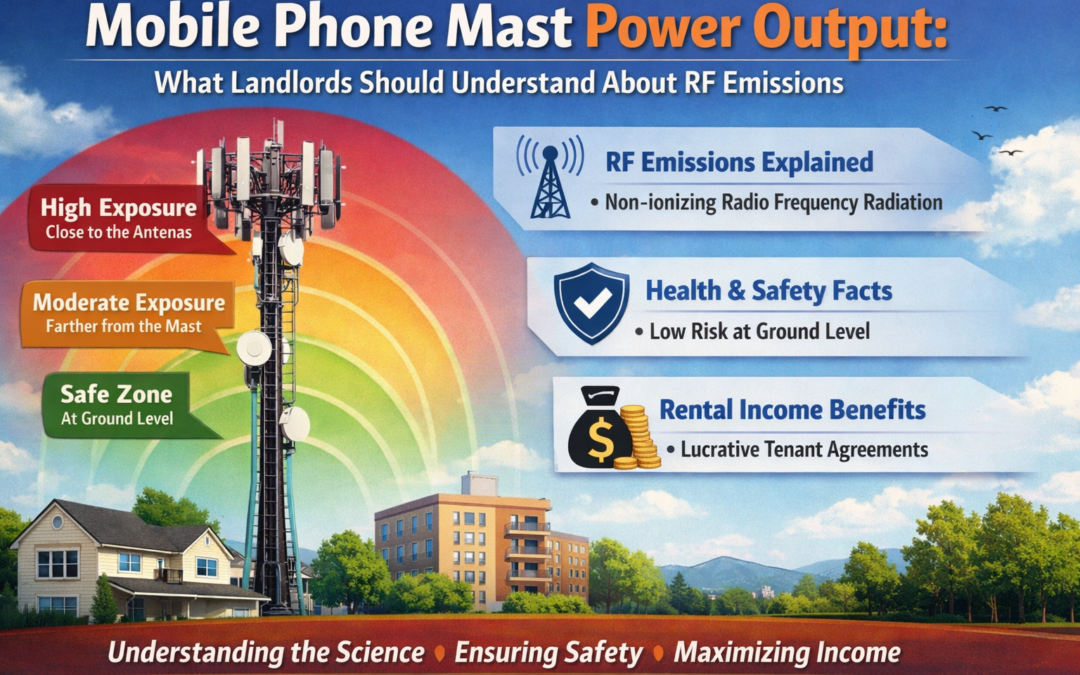
As mobile connectivity continues to expand, more landlords are being approached to host mobile phone masts on their properties. While this presents a valuable opportunity for additional income, it also raises important questions—particularly around power output and radiofrequency (RF) emissions.
Understanding how these systems work is essential for making informed decisions. Concerns about safety, regulations, and long-term implications are common, but much of the confusion comes from misinformation. This guide breaks down what landlords need to know about mobile phone mast power output, how RF emissions behave, and what it means for your property and tenants.
What Is Mobile Phone Mast Power Output?
Mobile phone mast power output refers to the amount of energy transmitted by antennas to provide wireless communication signals. This power is typically measured in watts and varies depending on the type of installation, network requirements, and location.
Contrary to popular belief, higher power output does not necessarily mean higher exposure risk. Mobile networks are designed to optimize coverage while minimizing energy usage. In many cases, especially in urban areas, lower-powered antennas are used more frequently to maintain efficient coverage.
Modern infrastructure relies on a network of smaller cells rather than a few high-powered masts. This approach improves signal quality while reducing overall emission levels in any given area.
Understanding RF Emissions
RF emissions are a form of non-ionizing electromagnetic radiation used to transmit signals between devices and network towers. Unlike ionizing radiation (such as X-rays), RF emissions do not carry enough energy to damage DNA or cause cellular mutations.
Mobile phone masts emit RF signals in controlled levels, ensuring they remain within internationally recognized safety thresholds. These emissions disperse quickly over distance, meaning exposure levels drop significantly even a short distance away from the source.
For landlords, it’s important to understand that RF exposure from masts is generally much lower than many everyday sources, including personal mobile phone usage.
Are RF Emissions Safe?
Safety is one of the most common concerns among landlords and tenants. Extensive research conducted by global health organizations has consistently shown that RF emissions from mobile infrastructure, when within regulated limits, do not pose a known health risk.
Regulatory bodies enforce strict guidelines to ensure compliance. These limits are set well below levels that could cause any biological effects. Mobile network operators are required to design and maintain their equipment within these parameters.
In practical terms, this means that a properly installed and compliant mobile phone mast operates safely in residential, commercial, and mixed-use environments.
Regulations and Compliance
All mobile phone masts must adhere to strict regulatory standards governing RF emissions. These standards are based on guidelines developed by international scientific organizations and are implemented at a national level.
Operators must conduct assessments to ensure that emission levels remain within permitted limits. These assessments consider factors such as antenna height, orientation, and surrounding environment.
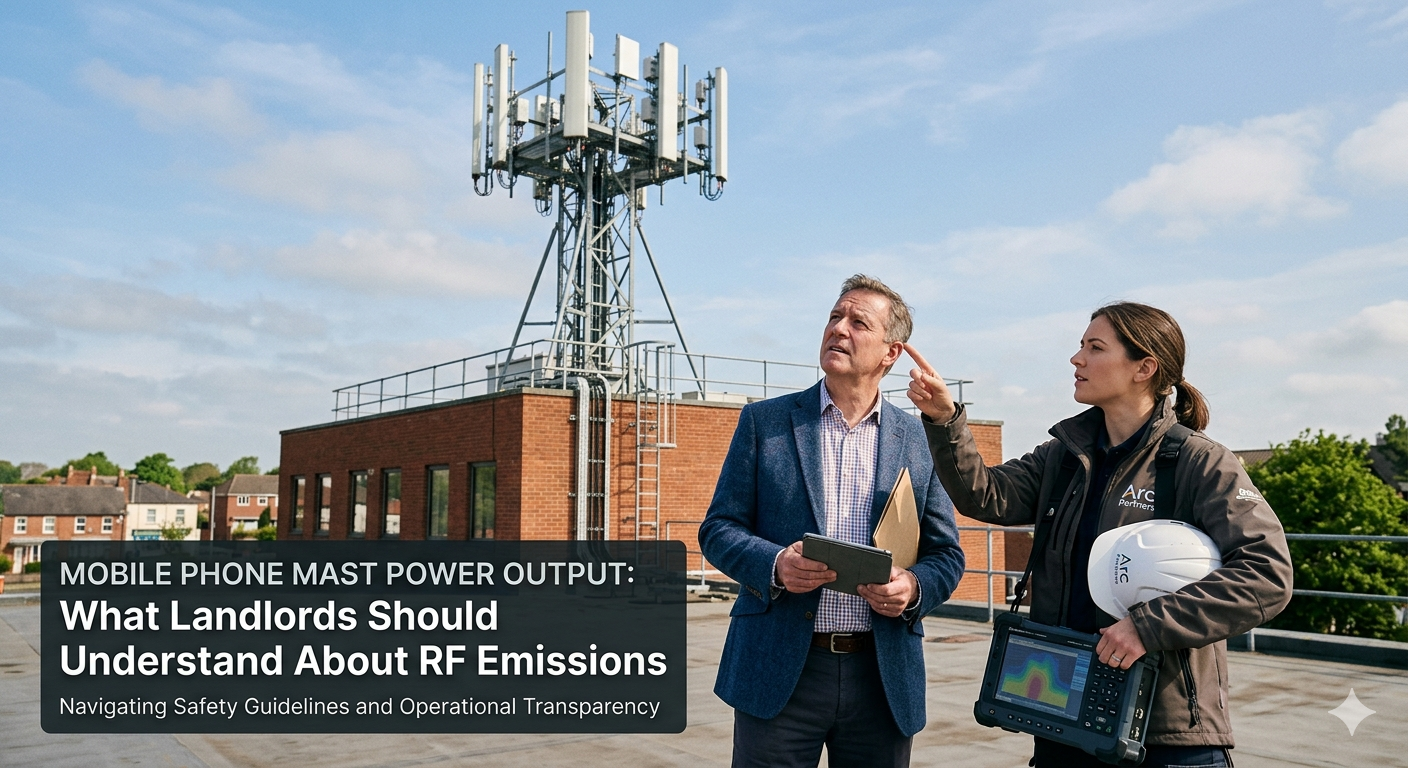
Landlords should always request compliance documentation before agreeing to an installation. Working with experienced advisors like Arc Partners can help ensure that all legal, technical, and safety requirements are properly addressed before signing any agreements.
How Distance and Position Affect Exposure
One of the most important factors influencing RF exposure is distance from the antenna. Emission levels decrease rapidly as you move away from the source.
Interestingly, the highest exposure is not directly beneath the mast but rather at a distance in front of the antenna where the signal is directed. This means that areas directly below rooftop installations typically experience minimal exposure.
Proper placement and design play a crucial role in ensuring safety. Antennas are carefully positioned to direct signals outward, avoiding unnecessary exposure to the building itself.
Benefits of Hosting a Mobile Phone Mast
For landlords, hosting a mobile phone mast can offer several advantages beyond financial returns:
Stable Rental Income
Long-term lease agreements provide a reliable and consistent income stream.
Minimal Space Usage
Masts require relatively small areas, often utilizing unused rooftop or land space.
Increased Property Value
In some cases, properties with telecom infrastructure can become more attractive due to connectivity advantages.
Supporting Connectivity
You contribute to improving mobile coverage in your area, benefiting residents and businesses alike.
With expert guidance from Arc Partners, landlords can maximise these benefits while ensuring compliance and fair lease terms.
Common Misconceptions About RF Emissions
There are several myths surrounding mobile phone masts that often cause unnecessary concern:
“Higher power means higher risk”
In reality, power levels are carefully controlled and optimized for efficiency, not maximum output.
“Living near a mast is dangerous”
Scientific evidence shows that exposure levels in residential areas are well within safe limits.
“Masts emit constant high radiation”
Power output varies depending on demand, and systems are designed to use only the energy needed.
Understanding these facts helps landlords make confident, informed decisions without being influenced by misinformation.
Why Professional Advice Matters
Navigating telecom agreements and understanding technical details can be complex. That’s why many landlords choose to work with specialists like Arc Partners.
From initial site evaluation to lease negotiation and compliance checks, professional advisors ensure that your interests are protected. They also help you understand technical aspects such as RF emissions in clear, practical terms.
Having expert support allows landlords to secure better financial outcomes while maintaining full confidence in safety and regulatory compliance.
Conclusion
Mobile phone mast power output and RF emissions are often misunderstood, but the reality is far more reassuring than many assume. These systems are designed with safety, efficiency, and strict regulatory compliance in mind.
For landlords, understanding the basics of RF emissions can remove uncertainty and open the door to valuable opportunities. With proper guidance and due diligence, hosting a mobile phone mast can be both safe and financially rewarding.
By working with trusted experts like Arc Partners, landlords can confidently navigate the process, ensuring compliance, maximising returns, and contributing to essential communication infrastructure.
FAQs for Mobile Phone Mast Power Output:
What is the typical power output of a mobile phone mast?
Mobile phone mast power output varies depending on location and network demand, but it is generally low and carefully controlled. Operators optimise output to ensure efficient coverage while staying well within strict safety and regulatory limits.
Are RF emissions from mobile masts harmful to health?
No, RF emissions from compliant mobile masts are considered safe. They fall well below international safety limits and are classified as non-ionizing radiation, meaning they do not have enough energy to damage human cells or DNA.
Does living near a mobile phone mast increase exposure risk?
Exposure levels decrease significantly with distance, and areas directly beneath masts often have minimal exposure. Studies show that living near a compliant mast does not pose a significant health risk when safety guidelines are followed.
Do mobile phone masts operate at full power all the time?
No, masts adjust their power output based on network demand. They operate efficiently by using only the necessary energy required to maintain signal quality, which helps reduce unnecessary RF emissions.
What should landlords check before installing a mast?
Landlords should review compliance certificates, lease terms, and safety documentation. Consulting experts like Arc Partners ensures that all technical, legal, and financial aspects are properly evaluated before agreeing to installation.
Can hosting a mast affect property value or tenant concerns?
While some tenants may have concerns, clear communication and factual information can address them. In many cases, the financial benefits and improved connectivity outweigh potential drawbacks when installations are properly managed.