
In recent years, the demand for reliable mobile connectivity across the UK has grown rapidly, with over 84 million mobile subscriptions and around 97% of the population using mobile services, as per Statista. To meet the rising data usage, telecom operators continue to expand their networks. As a result, landlords are approached to host a mobile phone mast on their property. In this blog, Arc Partners will provide you with everything you need to know about Mobile Phone Mast on your Land, its managing operators, access rights and your Obligations.
Mobile UK states that the UK currently has over 111 million mobile subscriptions, which shows about 1.37 connections per person. According to Ofcom, UK consumers use more than 1.2 billion gigabytes of mobile data every month, contributing to the growing demand for telecom infrastructure and around 83% of the UK population has access to 5G services.
Why Mobile Phone Masts Are Increasing Across the UK
Although mobile network usage has increased significantly in the last ten years due to the rapid uptake of smartphones, widespread use of streaming services, and increased use of remote work by millions of people, this has put tremendous pressure on telecoms networks to accommodate the growth in traffic across the network. Because of this large increase in demand for mobile services, mobile network operators are investing heavily in expanding their infrastructure.
- Increase in mobile data consumption throughout the United Kingdom
- Expansion of 4G and 5G Networks
- The government and its regulatory bodies have initiated various initiatives to promote rural connectivity
- Growing reliance on reliable mobile services by businesses and public safety agencies
There are currently tens of thousands of mobile cell site antennas throughout England, Scotland, Wales and Northern Ireland, and thousands more will be constructed as part of the national plan to improve and expand the availability of mobile services. Many new mobile cell sites will be constructed using private land, commercial buildings, or unenclosed rural land.
What It Means If a Mobile Phone Mast Is on Your Land
In order for mobile phone masts to go up on private property, usually a formal agreement between the landowners and the telecommunications operators is reached. These agreements will outline the rights and responsibilities of each party.
There are three common types of agreements:
Lease Agreements – These contracts are often long-term, which allows the operator to install equipment on the property for an agreed time period.
Wayleave Agreements – These agreements permit telecommunications equipment or cable runs to cross over someone else’s property.
Rooftop Agreements – These agreements are generally used for commercial buildings or apartment complexes.
If you are a landowner and will allow a telecommunications company to place a tower on your property, there are benefits to you such as:
- Regular rental payments
- Long-term agreements resulting in predictable rental amounts
- Contributing to the improvement of the local area’s mobile phone coverage
Understanding Your Rights as a Landowner
In order to host telecommunications infrastructure on your property, landowners will need to understand the framework of laws that govern these agreements. In the United Kingdom all telecommunications infrastructure is governed by the Electronic Communications Code (ECC).
The EEC allows telecommunications operators certain rights to install and maintain such infrastructure, while also laying down protections for landowners.
Therefore, it is important for landowners to know and understand their rights, which include the right to:
- negotiate lease agreements and rental payments
- obtain an independent evaluation
- have their land protected from unreasonable access/use
- contest certain demands from operators via legal means
Access Rights Operators May Have on Your Property
In general terms, telecom operators need continuous access to sites with mobile phone masts. This access is typically outlined in the lease or wayleave agreement made with the landowner. Access may be needed for maintenance, upgrades to the network (4G or 5G), emergency repairs to maintain service and the installation of additional antennas and telecom equipment.
The access agreement usually specifies:
- How much notice must the operator give before site access?
- What routes must the operator take to access the mast?
- Health and safety requirements when performing maintenance work.
Landowners should evaluate these provisions to ensure that they will not prevent the normal use of the land.
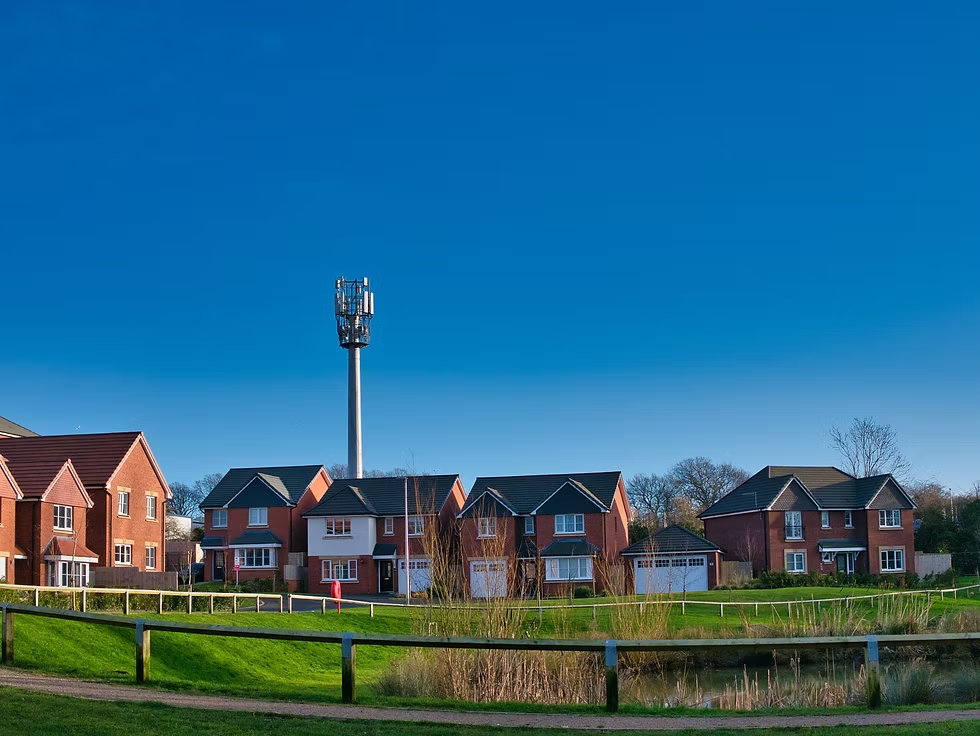
What are Your Responsibilities as a Mobile Phone Mast Site Provider
- Landowners must provide reasonable access to telecommunications engineers and maintenance personnel as outlined in the lease or wayleave agreement.
- The land or building which supports the mobile phone mast must remain structurally safe and accessible.
- Landowners must follow the provisions in the lease or wayleave agreement, including limitations regarding the use of the land surrounding the mobile phone mast.
- Planning and regulatory permissions must remain in effect for the length of the term of the lease or wayleave agreement.
Financial Considerations for Landowners Hosting a Mobile Phone Mast
Rental income is one of many reasons that landowners agree to host a mobile phone mast on their property. The valuation of telecommunications rentals in the UK has significantly altered. Most telecommunications rental contracts in the UK had significantly lower rental rates than prior, some landowners saw their rent reduced by 90% at the time their contract was due for renewal and most rentals are now based upon the land rather than network access to space.
Despite this devaluation, owners of cellular towers may still benefit from a variety of financially beneficial benefits such as annual rent payments, upgraded equipment payments, site access fees and compensation for new equipment added to the site.
What are the Common Challenges Landowners Face with Mobile Phone Mast Agreements?
There are many challenges and concerns landowners have with hosting mobile phone towers as detailed in the following list:
- Disputes regarding the renegotiation of the terms of rent.
- The operator will generally request to upgrade equipment at least once during a contract term.
- The legal language in telecommunications agreements is often extremely complicated.
- Restrictions may be placed upon the construction of additional improvements upon the property until the last telecommunications equipment has been removed.
- Local government and community members may have significant concerns regarding the installation of a telecommunications tower in their community.
Best Practices for Managing a Mobile Phone Mast on Your Land
Landowners may follow several steps or best practices with respect to hosting a mobile phone tower on their properties. Some of these best practices are:
- Regularly review your telecommunications agreements.
- Obtain independent valuation reports regarding your property and tower site.
- Document all visits to your property by the operator and all discussions with the operator regarding your mobile phone tower site.
- Maintain up-to-date records of all equipment at your tower location.
- Ensure access rights to your site are strictly followed per the terms of your agreements with the telecommunications operator.
How Arc Partners Helps Landowners With Mobile Phone Mast Agreements
Arc Partners is able to assist both landowners and property owners in negotiating telecom infrastructure agreements with confidence to help them manage their telecom property matters. Arc Partners are Chartered Surveyors and are RICS accredited to provide expert guidance in all areas of telecommunications and property management.
- Negotiation & Provision of Telecom Lease Agreements
- Rent Review & Valuation of Telecom Leases
- Advice Regarding Electronic Communications Code Compliance
- Assist & Advise Landowners in Disputes Related to Telecom Operators
- Strategic Advice Regarding Telecom Infrastructure & Property Assets
Conclusion
To sum up, the above information on the topic “Mobile Phone Mast on My Land” covers everything you need to know about Mobile Phone Masts, their Managing Operators, Access Rights, and Your Obligations. If you need professional telecom property advice to ensure you maximise benefits while protecting your assets, contact Arc Partners today, dial 020 3689 0282 or email enquiries@arcpartners.co.uk.
FAQs About the Mobile Phone Mast on My Land
Question. How much rent can I earn from a mobile phone mast on my land in the UK?
Answer. In the UK, the rent for a mobile phone mast has dropped significantly due to the Electronic Communications Code 2017. Rural greenfield sites typically yield somewhere around £1,750 to £2,000 per year.
Question. Can I refuse a mobile phone mast on my land?
Answer. A landlord can refuse any proposal from a telecommunications provider. However, if the telecommunications provider believes that they can prove that there is an overriding public interest in placing a mobile phone mast in that spot, they can apply legally under the Electronic Communications Code to obtain the rights necessary to do so.
Question. Can a mobile phone mast affect my property value?
Answer. The total effect on property value will vary based on several considerations, but generally, property values will either see no less than an average change in property value or very little.
Question. How long do mobile phone mast agreements usually last?
Answer. In the UK, the majority of mobile phone mast leases are long term and have terms ranging from 10 to 25 years, and most will also have a clause that allows for either a tenant rent review or for renewal of the lease to occur.